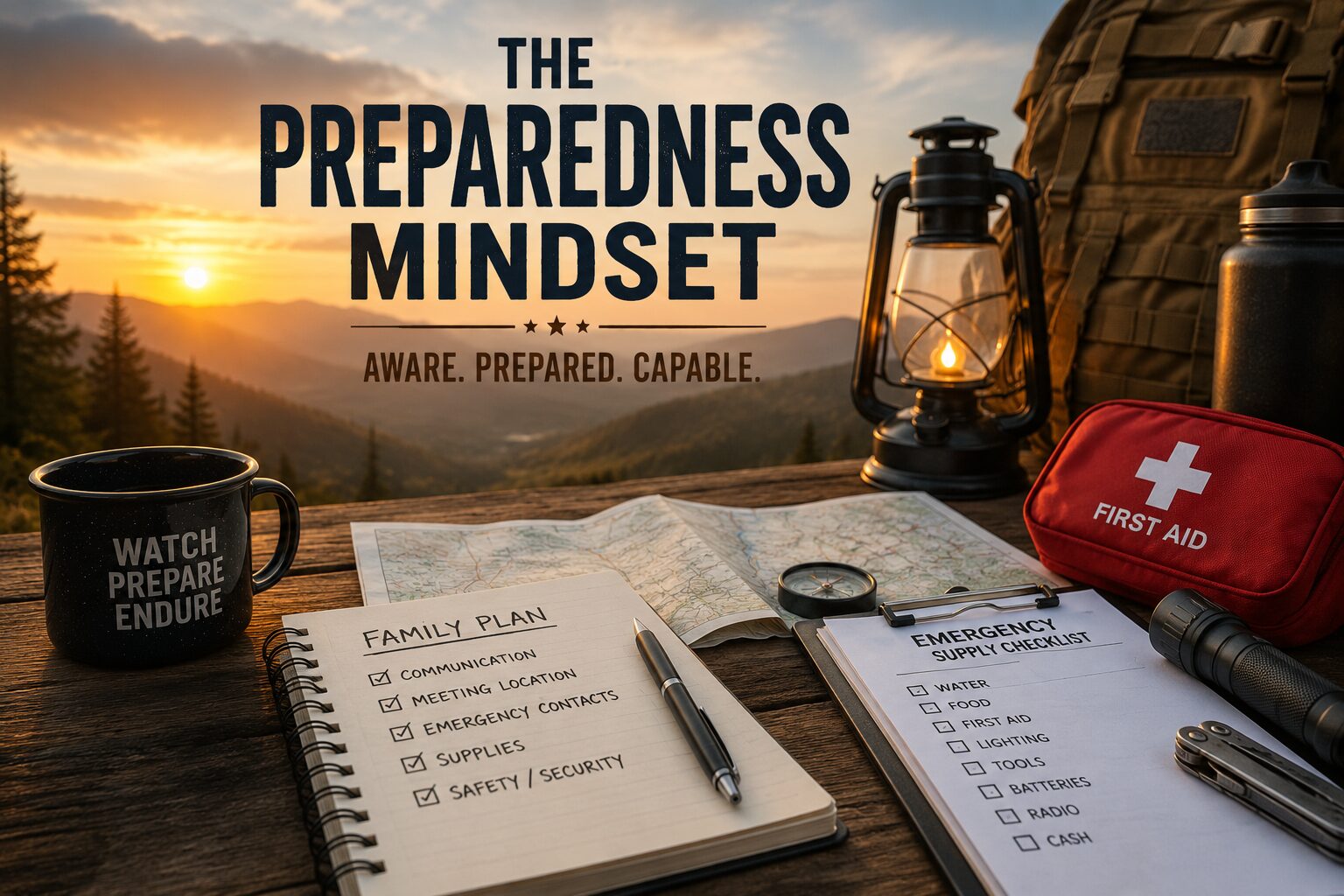
The Preparedness Mindset
The Preparedness Mindset
When people hear the word “preparedness,” they often think of stockpiles, emergency kits, or survival equipment. While those things can certainly play a role, preparedness begins long before supplies are purchased or plans are written. At its core, preparedness is a mindset.
A preparedness mindset is the habit of recognizing that unexpected events occur and taking reasonable steps to reduce their impact before they become crises. It is not driven by fear or pessimism. Rather, it is rooted in awareness, responsibility, and the understanding that our actions today can influence our circumstances tomorrow.
Throughout history, individuals and communities have faced natural disasters, economic hardships, accidents, power outages, severe weather, and countless other disruptions. While no one can predict every challenge, many hardships can be lessened through thoughtful preparation. Those who prepare are often better positioned to protect their families, assist their neighbors, and make sound decisions under pressure.
Preparedness Is Not Fear
One of the most common misconceptions about preparedness is that it is motivated by fear. In reality, preparedness often has the opposite effect.
Fear thrives in uncertainty and helplessness. Knowledge, planning, and capability reduce uncertainty and increase confidence. A family that has discussed emergency plans, maintains basic supplies, and understands how to respond to common emergencies is generally less anxious than one that has never considered such possibilities.
Preparedness is not about expecting the worst. It is about recognizing that challenges are a normal part of life and taking reasonable steps to address them before they occur.
Awareness Comes First
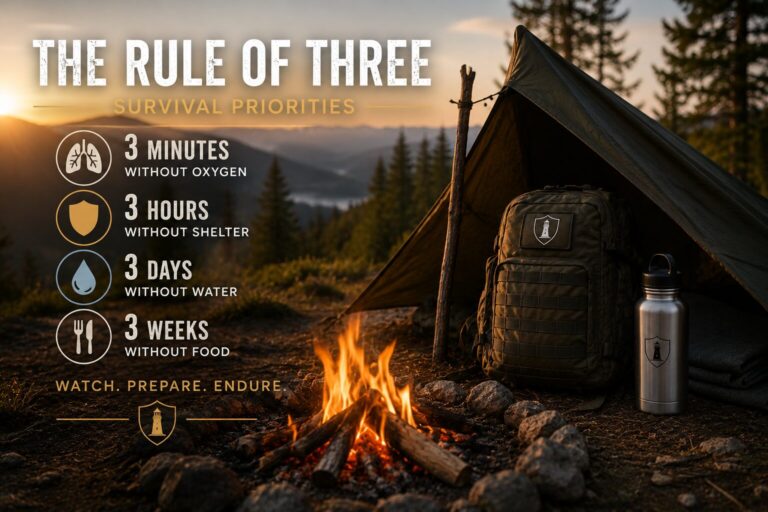
One of the most useful frameworks for understanding where to begin is the Rule of Three, which helps prioritize survival needs during an emergency.
A watchman remains attentive to developing conditions. He observes what is happening around him, identifies potential concerns, and takes action before problems become emergencies. In much the same way, preparedness requires us to pay attention to our surroundings, our communities, and the broader world.
Situational awareness helps us recognize risks early. Whether those risks involve approaching severe weather, financial instability, infrastructure problems, or local safety concerns, awareness provides the opportunity to prepare while options remain available.
The earlier a problem is identified, the more choices we typically have in responding to it.
Capability Matters More Than Equipment
Equipment has value, but capability matters more.
Two people may own identical emergency supplies, yet achieve very different outcomes depending on their knowledge, skills, and judgment. Supplies can be lost, damaged, or exhausted. Practical skills remain valuable regardless of circumstances.
Learning basic first aid, understanding emergency communications, developing self-reliance, improving physical fitness, and practicing problem-solving are all examples of preparedness that require little equipment but can provide significant benefits.
Preparedness is not measured by what we own. It is measured by what we can do.
Small Steps Produce Meaningful Results
Many people delay preparedness because they believe they must accomplish everything at once. The reality is that preparedness is built gradually.
A family emergency plan, several days of stored water, a basic emergency kit, or learning a new skill may seem like small steps. Likewise, adding a few inexpensive, high-value food staples such as rice, beans, oats, pasta, or other long-shelf-life foods can provide a practical and affordable foundation for emergency food storage. These items are widely available, relatively inexpensive, and can remain useful for extended periods when properly stored.
Preparedness also includes considering personal and family security. For many law-abiding citizens, this may include obtaining appropriate training and legally owning the means to protect themselves and their loved ones. Just as first aid supplies are intended for emergencies, personal protection measures are intended to address situations we hope never occur but should nevertheless be prepared to face.
Over time, these small efforts accumulate into meaningful capability. The goal is not to create a bunker or prepare for every imaginable disaster. Rather, it is to steadily improve our ability to respond to disruptions, emergencies, and unexpected challenges.
Progress is more important than perfection.
The goal is not to prepare for every possible scenario. The goal is to become more capable tomorrow than we are today.
Preparedness and Stewardship
Preparedness is closely connected to stewardship.
The resources entrusted to us—our families, homes, finances, health, knowledge, and communities—deserve thoughtful care. Preparing for foreseeable challenges is one way we exercise responsible stewardship over those responsibilities.
Preparation allows us not only to care for ourselves, but also to assist others when difficulties arise. Communities become stronger when individuals and families are capable, informed, and willing to serve.
Moving Forward
The preparedness mindset is not a destination. It is an ongoing process of learning, observing, improving, and adapting.
We cannot eliminate uncertainty from life, but we can increase our ability to respond effectively when challenges arise. By developing awareness, building practical skills, and taking reasonable steps to prepare, we become better equipped to protect what matters most and to help others when they need it.
Preparedness is not about fear.
It is about responsibility.
It is about capability.
And ultimately, it is about being ready to meet tomorrow’s challenges with confidence rather than panic.
Continue Exploring
Preparedness is not a destination—it is an ongoing process of learning, planning, and serving others. Whether you are building practical skills, studying current events, or strengthening your family’s resilience, we invite you to continue exploring.
Learn more about the mission behind The Watchman Imperative on our About Page. If you have questions, suggestions, or would like to connect with us, visit our Contact Page.
Explore More:
Featured Content | Impactful Events | Resources | Newsletter