Nature’s Fire Starter: Finding and Using Fatwood (Lighter Knot)
By The Sentinel
One of the greatest advantages of learning survival skills is discovering that nature often provides what we need if we know where to look. Few natural fire starters are as dependable as lighter knot, also known as fatwood. Long before commercial fire starters were available, experienced woodsmen sought out this resin-rich pine because it ignites easily, burns intensely, and remains usable even after years of exposure to the elements. If you know how to recognize it, a single piece of lighter knot can provide the fuel for dozens—even hundreds—of fires.
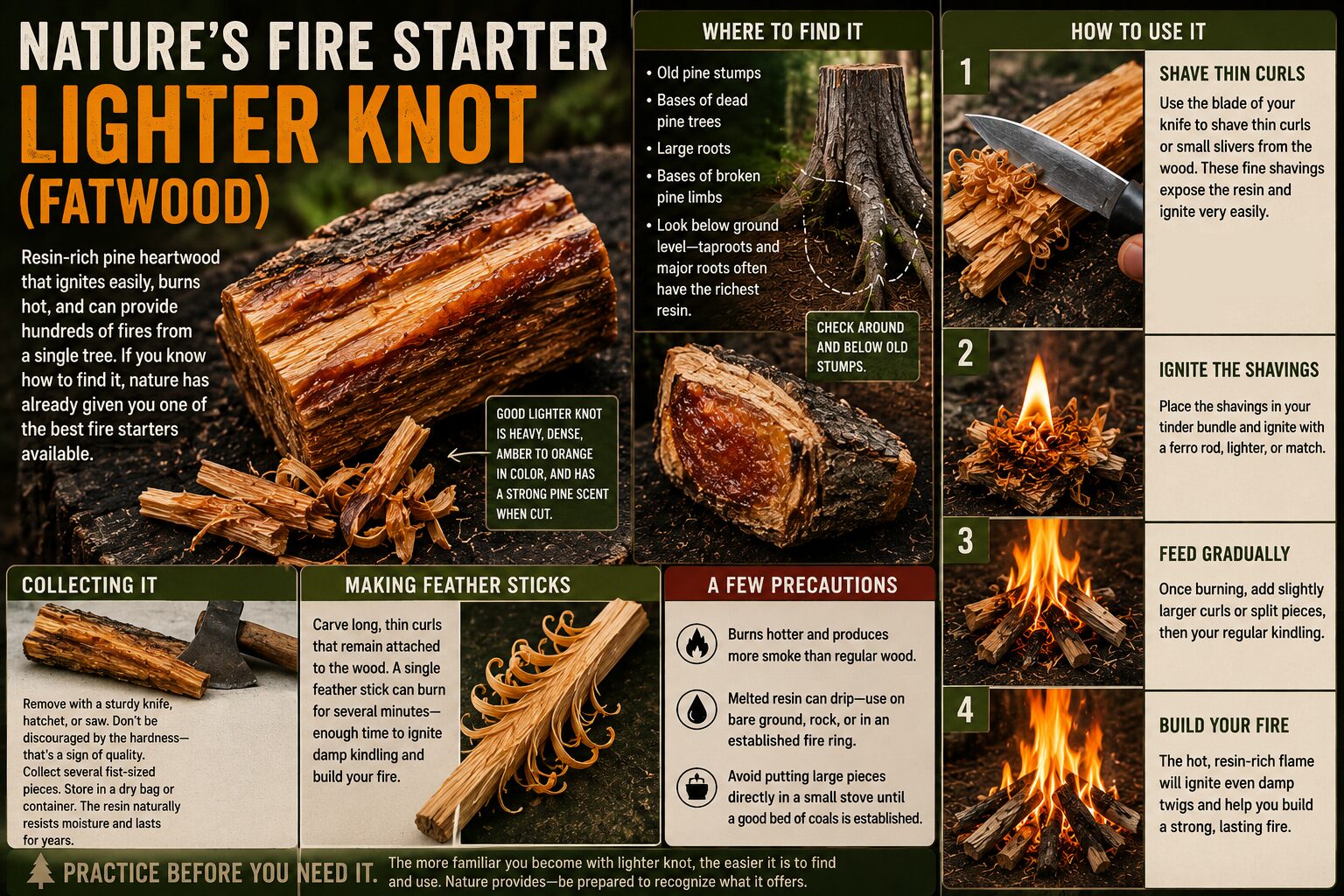
Lighter knot is pine wood that has become saturated with natural resin, sometimes called pitch. When a pine tree is injured, loses a large limb, or begins to die, it often pumps resin into the damaged area as a defense against insects, disease, and decay. Over time, the softer wood gradually rots away while the resin-soaked heartwood remains. The result is an exceptionally dense, hard piece of wood that is packed with highly flammable resin.
The best place to look for lighter knot is in old pine stumps, especially below ground level where the stump transitions into the taproot and major roots. This is often where the greatest concentration of resin is found. Resin-rich wood may also be found at the base of dead pine trees and where large limbs once joined the trunk. Good lighter knot is noticeably heavier than ordinary pine, often displays a rich amber or orange color, and gives off a strong pine aroma when freshly cut.
Because lighter knot is so dense, removing it usually requires a sturdy knife, hatchet, or small saw. Don’t be discouraged if it seems difficult to cut. That hardness is often a sign that you’ve found quality material. Rather than carrying one large chunk, collect several fist-sized pieces. They are easier to process in the field and will provide enough fire-starting material for many outings. Since the resin naturally resists moisture, lighter knot has an exceptionally long storage life and can remain usable for many years.
To use lighter knot, carve thin curls or small slivers from the wood with your knife. These fine shavings expose a large amount of resin and ignite very easily with a ferrocerium rod, lighter, or match. Once the shavings are burning, gradually add slightly larger curls or split pieces before introducing your regular kindling. The hot, resin-rich flame often burns long enough to ignite damp twigs that would otherwise be difficult to light.
Lighter knot also makes outstanding feather sticks. By carefully carving long, thin curls that remain attached to the wood, you create a bundle of fine fuel with tremendous surface area. A single feather stick made from quality lighter knot can burn for several minutes, providing plenty of time to ignite small branches and build a sustainable fire.
While lighter knot is an outstanding natural fire starter, remember that burning resin produces a hotter flame and more smoke than ordinary wood. Melted resin can also drip as it burns, so it is best used on bare ground, rock, or inside an established fire ring rather than on synthetic surfaces that could be damaged.
Like every survival skill, finding lighter knot becomes easier with practice. Spend time exploring old pine stands in your area and examine weathered stumps that others simply walk past. Dig around a few old stumps and split open the roots until you learn to recognize the color, weight, smell, and feel of resin-rich heartwood. Once you become familiar with it, you’ll begin spotting lighter knot almost everywhere pine trees have grown.
Preparedness is not simply about purchasing more equipment. It is about developing the knowledge to recognize the resources that nature has already placed around you. Lighter knot is one more reminder that the most valuable survival tool is often the one between your ears.