The Rule of Three: Understanding Survival Priorities
Every emergency forces decisions.
A winter power outage, a disabled vehicle on a remote road, or a severe storm can quickly turn an ordinary day into a survival situation. When time is limited and resources are scarce, knowing what matters most is often more important than having the latest equipment.
That is why experienced outdoorsmen, emergency responders, and preparedness advocates have long relied on a simple principle known as The Rule of Three.
While equipment certainly has its place, preparedness begins with understanding priorities and developing the right mindset.
Why the Rule of Three Matters
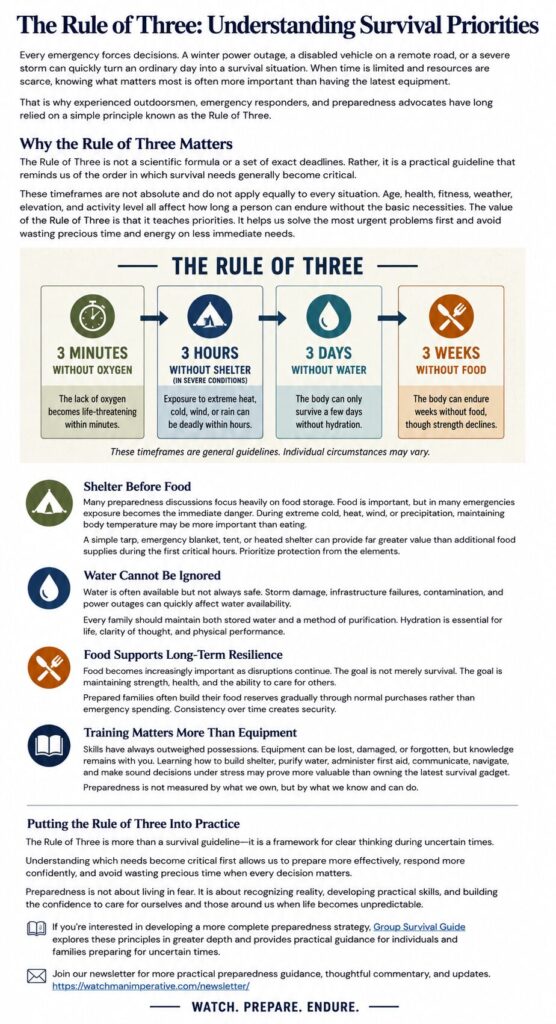
The Rule of Three is not a scientific formula or a set of exact deadlines. Rather, it is a practical guideline that reminds us of the order in which survival needs generally become critical.
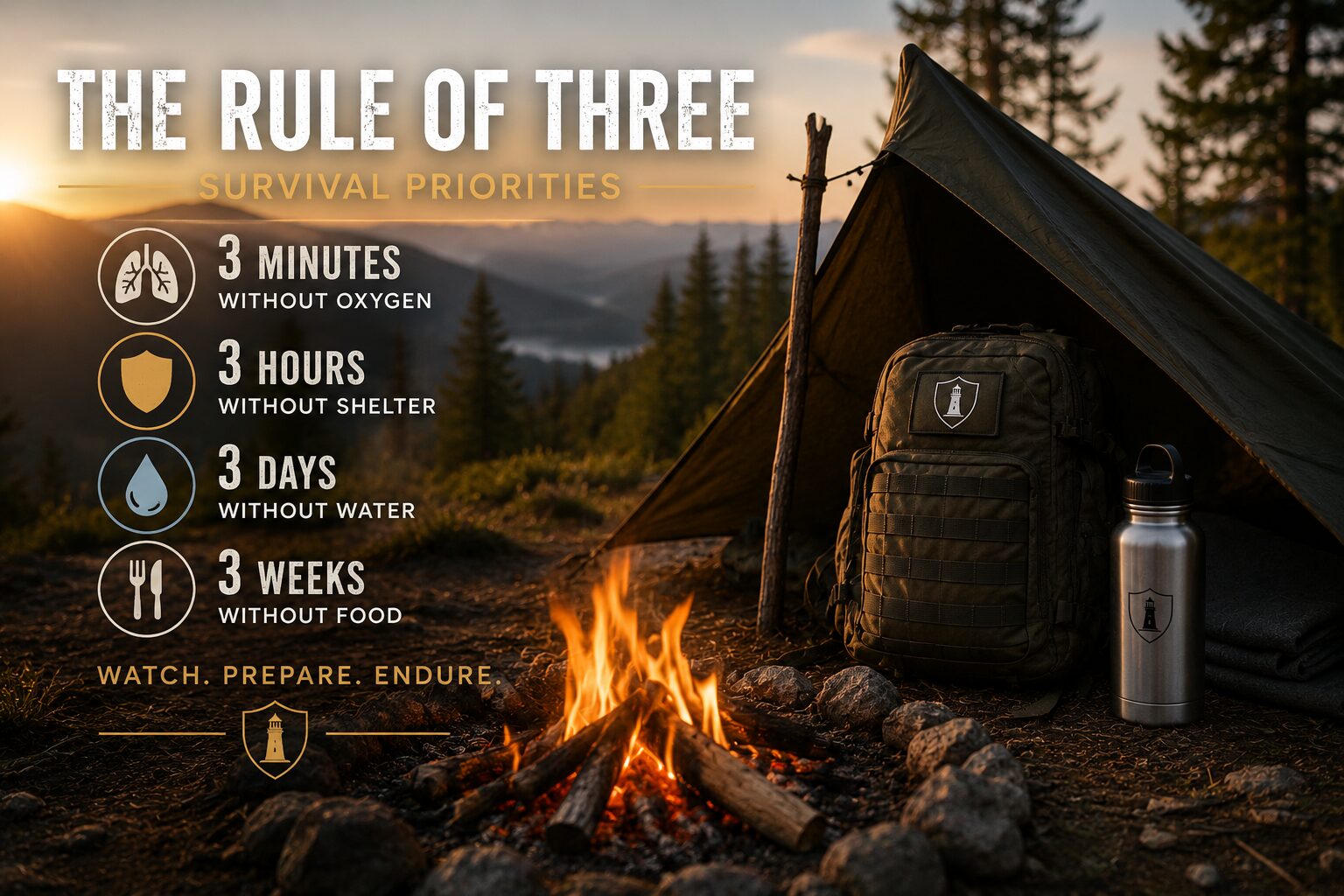
A person can typically survive:
- Approximately 3 minutes without oxygen
- Approximately 3 hours without adequate shelter in severe environmental conditions
- Approximately 3 days without water
- Approximately 3 weeks without food
These timeframes are not absolute. Age, health, physical condition, weather, injuries, and activity level all influence how long a person can survive without life’s necessities. The value of the Rule of Three is not found in precise numbers—it teaches priorities. It reminds us to solve the most urgent problems first rather than becoming distracted by less immediate concerns.
Shelter Before Food
Many preparedness discussions focus heavily on food storage. While food is essential, exposure often becomes the more immediate threat.
Extreme cold, excessive heat, wind, rain, or snow can quickly place the body under tremendous stress. Protecting yourself from the environment and maintaining a safe body temperature may become far more important than eating during the first hours of an emergency.
Security and preparedness are rarely built on a single solution. They are most effective when approached in layers, with each layer supporting the next.
Preparedness is not simply about owning equipment—it’s about understanding when and how to use it.
Water Cannot Be Ignored
Water is frequently available but not always safe.
Storm damage, contaminated wells, broken infrastructure, power outages, or damaged municipal systems can quickly limit access to clean drinking water.
Every family should maintain both an emergency supply of stored water and a reliable method of purification.
Hydration supports clear thinking, physical performance, and the ability to care for those around us. Without it, even simple tasks quickly become more difficult.
Food Supports Long-Term Resilience
Food becomes increasingly important as disruptions continue.
The objective is not merely surviving another day. The goal is maintaining the strength, health, and energy necessary to continue making good decisions, caring for loved ones, and adapting to changing circumstances.
Prepared families often build their food reserves gradually through normal grocery purchases rather than expensive emergency shopping. A consistent, long-term approach is usually more practical and sustainable.
Training Matters More Than Equipment
Skills have always outweighed possessions.
Equipment can be lost, damaged, forgotten, or exhausted. Knowledge remains with you.
Learning how to build shelter, purify water, administer first aid, communicate effectively, navigate unfamiliar terrain, and make sound decisions under stress may prove more valuable than owning the newest survival gadget.
Preparedness is not measured by what we own.
It is measured by what we know—and what we can do.
Putting the Rule of Three Into Practice
The Rule of Three is more than a survival guideline—it is a framework for clear thinking during uncertain times.
Understanding which needs become critical first allows us to prepare more effectively, respond more confidently, and avoid wasting valuable time when every decision matters.
Preparedness is not about living in fear.
It is about recognizing reality, developing practical skills, and building the confidence to care for ourselves, our families, and our communities when life becomes unpredictable.
Continue Your Preparedness Journey
If you’re interested in building a more complete preparedness strategy, Group Survival Guide expands on these principles with practical guidance covering preparedness planning, community organization, security, emergency response, and long-term resilience.
Whether you’re just beginning your preparedness journey or refining existing skills, our goal remains the same: helping individuals and families become more capable, informed, and prepared.
If you enjoy articles like this, consider subscribing to our newsletter to receive new preparedness articles, thoughtful commentary on current events, and practical resources delivered as they’re published.
Watch. Prepare. Endure.
Continue Exploring
Preparedness is not a destination—it is an ongoing process of learning, planning, and serving others. Whether you are building practical skills, studying current events, or strengthening your family’s resilience, we invite you to continue exploring.
Learn more about the mission behind The Watchman Imperative on our About Page. If you have questions, suggestions, or would like to connect with us, visit our Contact Page.
Explore More:
Featured Content | Impactful Events | Resources | Newsletter