Security Layers: Building a Stronger Foundation
When most people think about security, they think about locks, alarms, cameras, or firearms. While each of these tools has value, true security is rarely dependent upon any single measure.
Preparedness begins with priorities. Before considering the various layers of security, you may find it helpful to first read our article, The Rule of Three: Understanding Survival Priorities. Knowing what matters most during an emergency provides the foundation upon which every other preparedness decision is built. Once those priorities are understood, we can begin adding additional layers of capability that improve our ability to prevent, respond to, and recover from unexpected events.
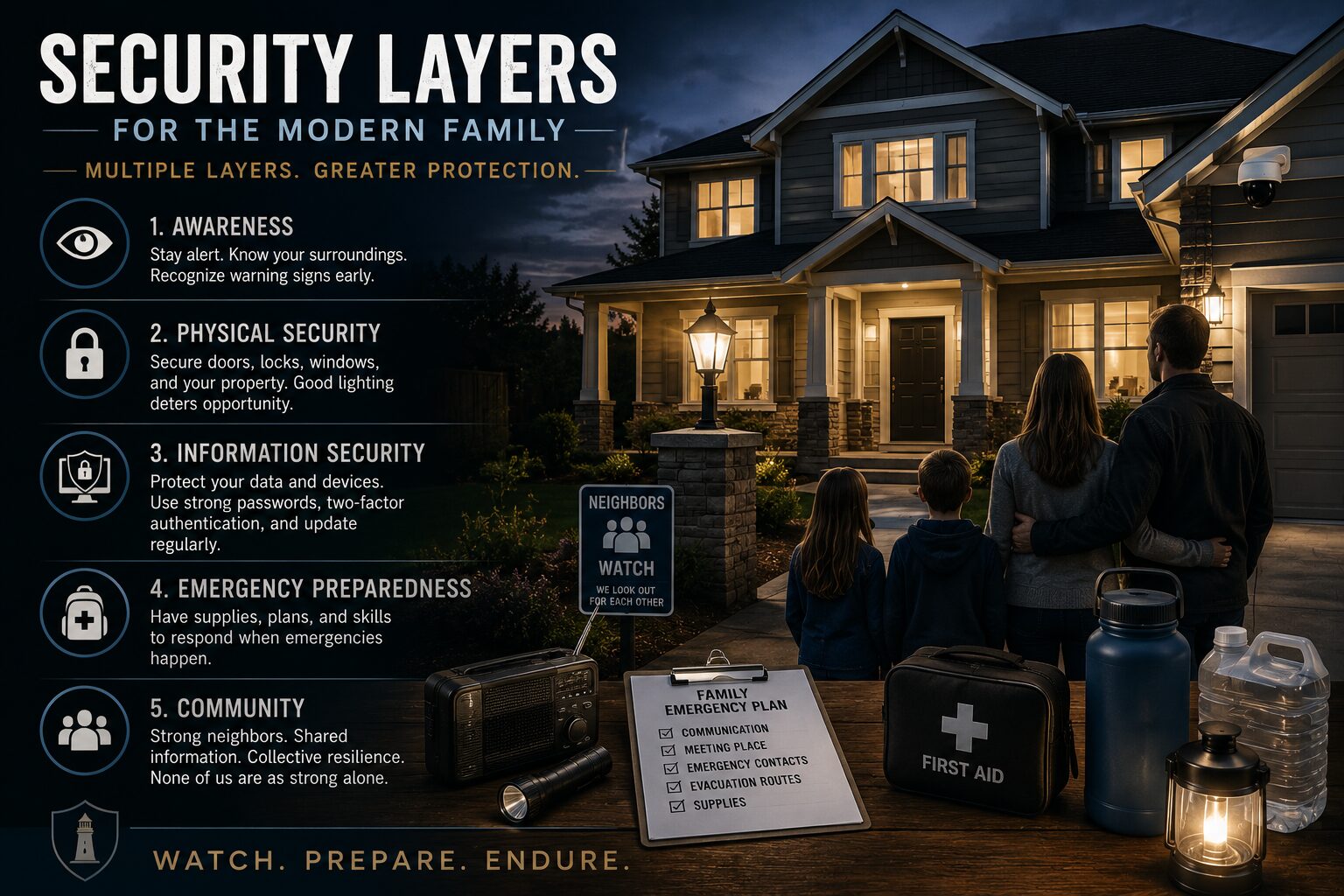
The most effective security plans rely upon layers.
Each layer provides an opportunity to detect, delay, deter, or respond to a threat before it reaches your family. No single layer is perfect, but together they create a stronger, more resilient system that is far more difficult to overcome than any single security measure alone.
Layer One: Awareness
The first layer of security is awareness.
Pay attention to your surroundings, recognize unusual activity, and remain informed about events occurring within your community.
Many problems can be avoided simply by noticing warning signs before a situation develops.
Layer Two: Physical Security
Physical security begins with the basics: locked doors and windows. From there, additional layers such as exterior lighting, security cameras, alarm systems, fences, gates, and other physical barriers increase the time, effort, and risk required for someone to gain unauthorized access.
Dogs can also provide an effective layer of security. A barking dog alone is often enough to alert a family that something is wrong while convincing an intruder to move on in search of an easier target. While trained protection dogs offer additional capabilities, even an ordinary family dog can provide valuable early warning simply by making its presence known.
The goal is not to create a fortress.
The goal is to make your home a less attractive target by encouraging threats to move elsewhere.
Layer Three: Information Security
Modern families store enormous amounts of personal information online.
Strong passwords, multi-factor authentication, regular software updates, and cautious social media habits help protect both privacy and financial security.
Layer Four: Emergency Preparedness
Many emergencies are not criminal in nature.
Storms, power outages, fires, medical emergencies, and infrastructure failures can affect families with little warning.
Preparedness supplies, emergency plans, and communication procedures help families respond effectively during uncertain circumstances.
Layer Five: Community
Strong communities provide security that no individual can create alone.
Neighbors who know one another, share information, and assist during emergencies contribute to collective resilience.
Preparedness is not merely an individual responsibility.
It is a community responsibility.
Security Through Layers
No single layer is perfect.
Every layer has strengths and weaknesses.
When multiple layers work together, the likelihood of successfully managing a threat increases significantly.
Prepared families understand that security is not a product.
It is a process.
Watch. Prepare. Endure.
Continue Exploring
Preparedness is not a destination—it is an ongoing process of learning, planning, and serving others. Whether you are building practical skills, studying current events, or strengthening your family’s resilience, we invite you to continue exploring.
Learn more about the mission behind The Watchman Imperative on our About Page. If you have questions, suggestions, or would like to connect with us, visit our Contact Page.
Explore More:
Featured Content | Impactful Events | Resources | Newsletter