When the Lights Go Out: Lessons from Modern Infrastructure Failures
Every generation believes the systems around them are more reliable than those of the past. Yet recent years have repeatedly demonstrated how fragile modern life can become when critical infrastructure fails.
Power outages, cyberattacks, transportation disruptions, supply chain shortages, and communication failures have affected communities across the world. Most of these events were temporary. The lesson is not that society is collapsing. The lesson is that disruptions occur more often than many people expect.
Preparedness is not driven by fear. It is driven by observation.
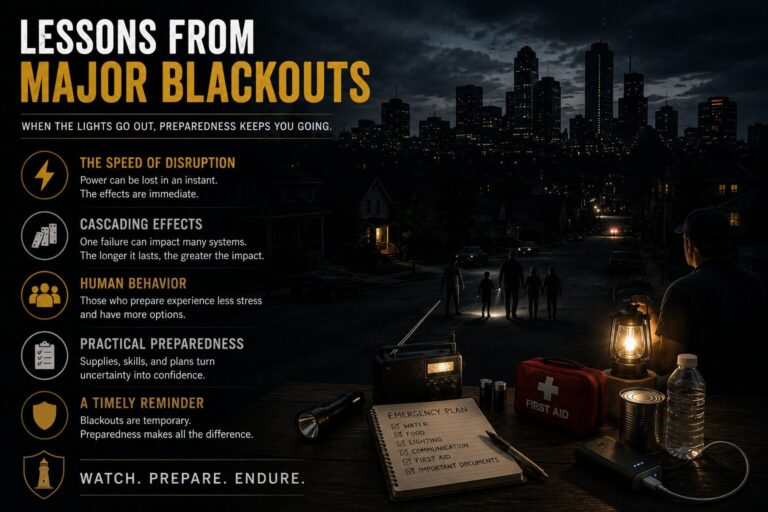
When electricity fails, grocery stores stop restocking. Fuel pumps stop operating. Communication becomes difficult. Many people discover they are only a few days away from serious hardship.
A prepared family does not need a bunker or years of supplies. A prepared family simply recognizes that modern conveniences depend upon systems that occasionally fail.
The most resilient households generally share several characteristics:
- They maintain an emergency food reserve.
- They store water or have a means to purify it.
- They possess multiple methods of communication.
- They have backup lighting and power options.
- They know their neighbors and community.
History repeatedly shows that communities recover faster when citizens are prepared before a crisis begins.
The question is not whether another disruption will occur.
The question is whether we will recognize the warning signs and prepare while conditions remain favorable.
As watchmen, our responsibility is simple:
Observe. Learn. Prepare.
“What I say unto you I say unto all, Watch.” — Mark 13:37